SEO, GEO & AI News: May 25th – June 7th, 2026
AI Summary
This post summarizes key industry shifts from May 25th to June 7th, 2026, focused on SEO and the new era of the agentic web and AI-driven search. Quentin Yacoub breaks down the first measurable hits on llms.txt, ChatGPT query fan-out patterns, Adobe's Semrush acquisition, and Screaming Frog's new MCP server and many more other news, with takeaways for SEO and GEO.

Table of Contents

Cet article est aussi disponible en français : Actualités SEO, GEO & IA : 25 mai – 7 juin 2026
After a few weeks away (parental leave in France, then a week in Basel meeting my Adobe team), I’m back in force with a packed edition of this format that will hopefully satisfy your curiosity about the latest in SEO, GEO, and AI.
The throughline of this edition is the ongoing shift toward the agentic web. We’re starting to see the first real hits on llms.txt files, Peec AI breaks down the patterns hiding in ChatGPT’s query fan-outs, and Adobe completes its acquisition of Semrush. On the tooling side, Screaming Frog ships an MCP server that changes how you can drive your crawls.
Dive in to see what this means for your SEO and GEO strategies, and jump straight to the sections that impact your daily work the most.
Have feedback on this digest? Connect with me on LinkedIn.
SEO News

What to Do Now That AI Overviews Turned Search Into 4x-Longer Reading Sessions
Kevin Indig reports on a clickstream study of ~846,000 U.S. Google sessions showing that when an AI Overview is present, time-on-SERP no longer tracks search intent: all five intent types cluster between 41.9% and 48.5% still on the page at 21 seconds, and sessions run about 4x longer.
Why it matters: We already know the average CTR has dropped since AI Overviews landed in Google's results. This study confirms it indirectly, and the takeaway is to adapt so you show up in those results, which at least strengthen brand awareness.

Google May 2026 Broad Core Update Is Done Rolling Out
Search Engine RoundtableJune 2, 2026Google's May 2026 broad core update has finished rolling out on June 2. Launched May 21, it took under 12 days and Google describes it as a regular, global update meant to better surface relevant, satisfying content from all types of sites, and not a penalty.
Read the documentationWhy it matters: If you see volatility in your rank-tracking tool, like Semrush Position Tracking, don't panic. Rankings always take a few weeks to settle after a core update, and only then can you really understand what changed.

Google Drops FAQ Rich Results From Search
Google has deprecated FAQ rich results, completing a pullback that began in 2023. FAQ structured data can stay on pages without causing issues, but it no longer earns visible FAQ results in Google Search.
Read the documentationWhy it matters: Adding FAQ structured data has long been a low-effort SEO tactic: it helps Google parse short Q&A content, can earn rich results, and in some cases improves visibility in the People Also Ask feature. Being present for those questions also makes it easier for LLMs to retrieve your pages during their query fan-out. So even with rich results gone, I will keep shipping FAQ markup.
GEO News

How to Make Your Website Agent-Ready
Suganthan Mohanadasan publishes an evidence-based guide to making a website 'agent-ready' across two surfaces: the page itself (semantic HTML, accessibility) and the protocol layer around it (AI bot rules in robots.txt, llms.txt, the /.well-known/ directory, MCP and A2A cards, WebMCP). His core point is that these protocols don't guarantee AI citations or traffic; what they do is cut agents' fetch-and-parse cost (about 5x smaller payloads) and make your site legible to the systems crawling it.
Patterns in ChatGPT Query Fanouts
Peec AIMay 5, 2026Tomek Rudzki analyzes ChatGPT's query fanouts and turns them into optimization guidance. The data shows ChatGPT most often injects words like 'best,' 'top,' 'comparison,' and 'reviews' and pulls review content and current-year freshness even when unasked.
Read the full studyWhy it matters: A great read. Understanding the query fanouts an LLM runs lets you optimize your pages to rank in the traditional search results those fanouts pull from, so the model retrieves and cites your content instead of a competitor's.
The Largest llms.txt Audit Yet
Flavio LongatoJune 1, 2026Flavio Longato analyzed 30 days of server logs across thousands of Adobe Experience Manager domains (22,494 requests) to see whether LLMs actually fetch the llms.txt files sites place at their root. Verifiable LLM agents accounted for just 258 hits (1.1% of traffic), while Googlebot was the single most active verifiable crawler with 1,219 requests. The bulk of activity (92.2%) came from unverified tools and AI-readiness auditors rather than language models genuinely consuming the files.
Read the full studyWhy it matters: Back in August 2025, Flavio's first study found essentially zero bot hits on llms.txt files, so seeing measurable traffic now, however modest, tells me the file is starting to register. It also lines up with Google's new Lighthouse agentic browsing score, which checks whether a site ships an llms.txt at all. I read this as early evidence that llms.txt is moving from a debated convention toward something the ecosystem actually monitors.
Google's Lighthouse Audit Recommends Shipping an llms.txt File
Yet another llms.txt story: Chrome for Developers documents the llms.txt audit inside Lighthouse's agentic browsing category, where Google recommends placing a concise Markdown llms.txt at the domain root so AI agents can grasp a site's structure and key content without crawling the entire architecture. It frames the file as a way to make a site more efficient for agentic exploration.
Read the documentationWhy it matters: There is an obvious tension here: Google is formally recommending llms.txt through Lighthouse, yet Flavio's audit shows almost no verifiable LLMs actually read the file today. I still think shipping a clean llms.txt is low-effort insurance, since the tooling and recommendations are clearly moving in that direction even if real consumption lags so far.
Ahrefs Q1 2026 AI Search Benchmark
AhrefsMay 31, 2026Ahrefs published its Q1 2026 AI Search Benchmark, analyzing 146M SERPs and 730K AI responses. The actionable takeaways: YouTube mentions correlate with AI brand visibility more strongly than any other signal, and content length barely matters (53% of cited pages are under 1,000 words). The report also recommends filling information gaps with specific, official content such as FAQs and 'how it actually works' pages, and monitoring brand mentions to correct what AI models say about you.
Read the full reportWhy it matters: I'm seeing more and more calls to monitor the accuracy of brand mentions inside LLM answers. In classic SEO the holy grail was ranking for non-branded keywords, so that is what we tracked; in the GEO era we also need to track branded queries. Adobe Brand Visibility nailed this by extracting your brand's mentions across LLMs so you can verify the information, checking YouTube sentiment about your brand, and adding relevant FAQs at the bottom of pages.
Markdown vs Stripped HTML vs Schema
RampApril 30, 2026Ramp ran a five-week experiment embedding tracked incentive offers on about 50 marketing pages, served in different formats: markdown, stripped HTML, schema. Markdown was the only format that reliably surfaced in LLM answers, and behavior varied sharply by model.
Read the full studyWhy it matters: Markdown keeps coming up consistently in the studies I read, even if the measurable wins aren't always huge. Serving your pages as .md is relatively low effort, especially if you run Cloudflare or AEM, so I strongly recommend doing it.
Beyond RAG: Why Every AI Search Platform Is Now Agentic
Search Engine LandMay 29, 2026Michael King (iPullRank) explains that AI search no longer works like simple RAG: every major platform now splits your question into many sub-searches (query fan out), picks the right tool for each, and critiques its own draft before answering. For your content, that means going deep across related sub-topics, writing self-contained passages that can stand on their own, and exposing tools or APIs where a function beats an article. He also warns that citation tracking now misses most of your real impact, and shares a practical audit you can run this week.
Read the full postWhy it matters: A fascinating article. I especially liked the proposed tracking metrics: sub-query coverage, retrieval-to-citation ratio, reflection survival rate, bridge-entity centrality, tool-call inclusion, and distillation stage-failure rate. I plan to dig into these more and run a few tests.
Adobe News
Adobe Completes Its Semrush Acquisition
Adobe has completed its acquisition of Semrush, bringing the brand-visibility platform's SEO, GEO, and agentic search optimization (ASO) into Adobe CX Enterprise. Semrush will integrate across Adobe Experience Manager, LLM Optimizer, Commerce, Experience Platform, and Brand Concierge.
Why it matters: Data is a critical resource, and Semrush is a leader in that space. This deal should benefit the various AEM tools, and therefore every team that relies on them. As an SEO, I'm genuinely excited about this acquisition. Welcome to the Semrush teams.
Adobe: The Decisions That Determine Whether AI Scales Value or Risk
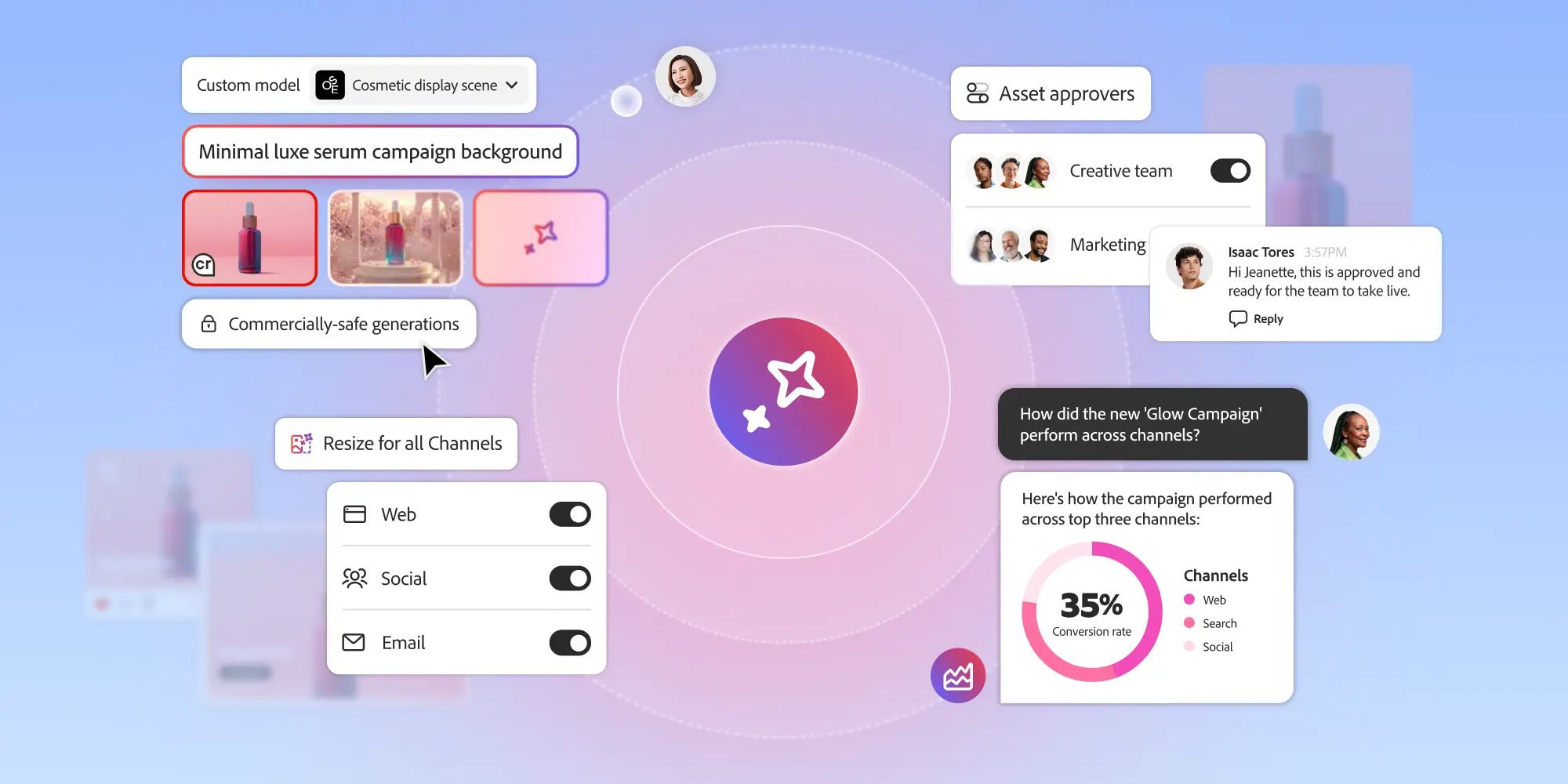
AdobeJune 4, 2026Emily McReynolds, Adobe's Head of Global AI Strategy, offers a framework to vet AI partners through four lenses: data trust, output control, governance over agent actions, and brand-safe quality at scale. She notes 65% of organizations had an AI agent-related security incident in the past year, and gives sample due-diligence questions for each lens.
Read the full postWhy it matters: I fully agree with Emily: we keep handing AI more responsibility and more access, both at work and in our personal lives. I see AI governance as an essential issue to build into our strategies, and I'm glad Adobe is positioning itself at the forefront here.
Tools News
Screaming Frog Adds an MCP Server
Screaming Frog's latest update introduces an MCP server that lets you drive the crawler with natural language from AI assistants. Through the MCP you can run and summarize crawls, manipulate and visualize the data, and automate export, data-combining, and analysis pipelines.
Why it matters: I've been waiting for this for a long time. You could already ask Claude, Codex, or another tool to analyze a page or a few, but it was never fully reliable. Screaming Frog is my favorite SEO tool, and being able to trigger a crawl from Claude Code and move straight into the analysis is fantastic; if your site is also connected to Claude Code, you can even fix the issues right away. Honestly, it's wild. Thank you, Screaming Frog.
Search Console Adds Generative AI Performance Reports
Google Search CentralJune 3, 2026Google launched new generative AI performance reports in Search Console that show how a site appears in AI Overviews and AI Mode. The reports surface impressions, pages, countries, devices, and dates, and the same data also stays in the overall Performance report.
Read the announcementWhy it matters: This gives us a clearer picture of the prompts we rank for, plus real data on the keywords and prompts that trigger AI Overviews or get used in AI Mode. Unfortunately it doesn't provide clicks or the answer it gives for the prompts.
Chrome's Lighthouse Adds an Agentic Browsing Score
Chrome for Developers documents a new experimental Lighthouse category that scores how well a site is built for AI agent interaction. It runs deterministic audits across several areas: WebMCP integration to expose tools to AI agents, accessibility-tree health (the machine's primary data model), layout stability for reliable element interaction, and the presence of an llms.txt file at the domain root.
Read the documentationWhy it matters: I see this as another step in Google's transition toward the agentic web, and the llms.txt check is its most contested part. A few months ago, server logs showed virtually no bot hits on the file; Flavio Longato's recent study of 5,000 sites now finds some, mostly from Google. Lighthouse formally scoring llms.txt gives weight to a standard the SEO community is still debating.
7 Ways to Automate Content Marketing with Ahrefs' Agent A
Ryan Law, Ahrefs' Director of Content Marketing, walks through Agent A, an autonomous marketing agent with unrestricted access to the full Ahrefs dataset. He details seven content-marketing workflows it powers: an 11-stage blog-writing pipeline, an article-updating pipeline with side-by-side diffs, automated monthly performance reports, a blog topical-authority audit, a competitor-content feed, a LinkedIn swipe file, and scientific internal-linking recommendations.
Read the full post
Please note: All opinions and blog posts shared on this website are strictly my own personal projects. They do not represent the views, strategies, or official products of my employer, Adobe.

Hi, I'm Quentin, an SEO/GEO Specialist at Adobe building AI powered tools for Site Optimizer and Brand Visibility. I use this site to document my thoughts on where search is heading in the age of AI, and to share the strategies and shortcuts I rely on.
Connect on LinkedInMore News Digests
SEO, GEO & AI News: October 5th – October 18th, 2026
Stay ahead with the latest SEO & GEO news (October 5th – October 18th, 2026). Insights on AI agents and WebMCP, the ChatGPT UTM bug and Claude's new rules.

SEO, GEO & AI News: June 8th – June 21st, 2026
Stay ahead with the latest SEO & GEO news (June 8th – June 21st, 2026). Insights on Google's May core update, llms.txt reality, and Adobe Brand Visibility.
SEO, GEO & AI News: April 13th – April 26th, 2026
Stay ahead with the latest SEO & GEO news (April 13th – April 26th, 2026). Insights on OpenAI’s crawling surge, Gemini's market share, and agentic commerce.
SEO, GEO & AI News: April 6th – April 12th, 2026
Stay ahead with the latest SEO & GEO news (April 6th – April 12th, 2026). Insights on why robots.txt fails news publishers and the 20% drop in GPT-cited domains.
SEO, GEO & AI News: March 23rd – April 5th, 2026
Stay ahead with the latest SEO & GEO news (March 23rd – April 5th, 2026). Insights on Google’s March Core Update, OpenAI’s strategy, and AI crawler optimization.